How a memory coach memorizes a large learning project: a 6‑step guide to using memory techniques for faster learning
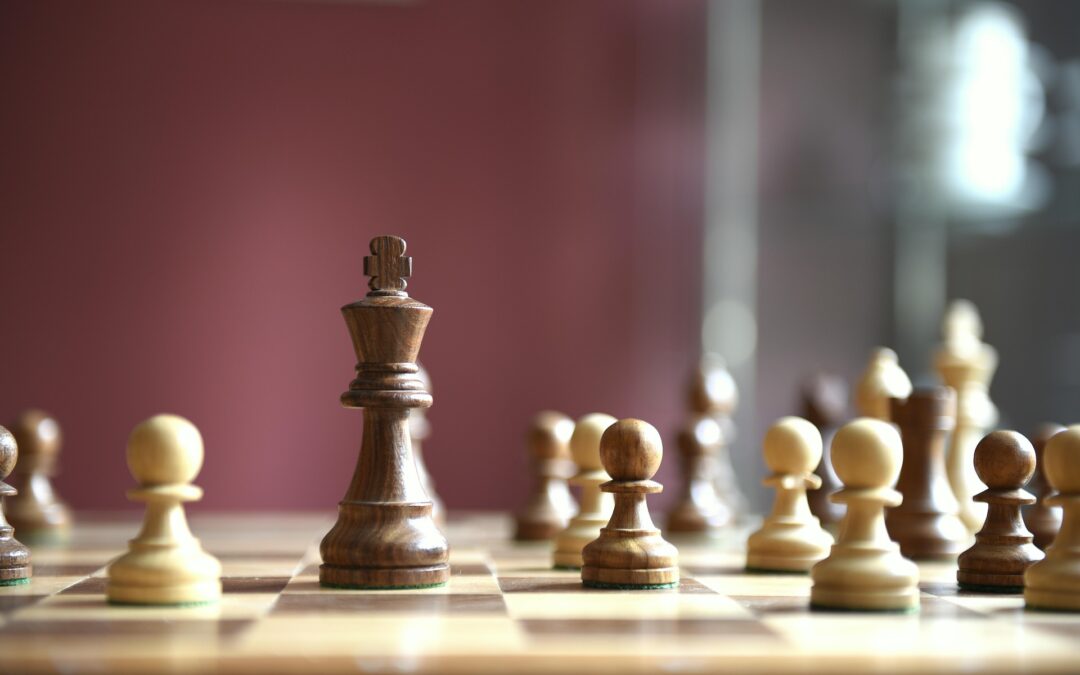
As a professional memory coach, I’m sharing the 6‑step process I use to apply memory techniques to any large learning project, using chess as my example.
This blog covers how as a memory coach I will remember the first chess pieces. But we will also look at the process used for both this small goal, and how to continue with memory techniques for a large memorization goal – like improving at chess.
My aim is that is that this process might help you apply this to your own learning goals, be they small or large.
We aren’t all captivated by chess, but it’s a great example to work though : )
Ok, so why chess
I love learning new things – it’s a large part of the reason I train in memory techniques. They give me the speed to learn more with the limited time I have on this planet.
Chess is complex, social, requires a high level of cognitive functioning, strategic and yes, suits some memorization. I think I will love it.
Memory training can improve your short-term memory generally but using memory techniques to learn quickly and then deeply is why I think everyone should understand them.
How a memory coach tackles a deep memorizing project like learning chess
Even if you are not interested in chess yourself, I encourage you to follow along. What you are really learning is the steps to applying memory techniques for any learning objective.
A lot of memory techniques are about encoding. Converting some information you are trying to learn. Translating something that you don’t yet know into something you do.
If you are new to memory techniques a few basic video’s and blogs might assist first. Try this blog and video about memory palaces and this video on remembering words and names.
The more you encounter different approaches using mnemonics for varied learning topics the more you will know how to translate information for your own next learning goal. Knowing how to apply the skills you are practicing is a skill set in its own, and is what a lot of my memory coaching students come to me for.
So follow along with me here, and if you are not interested in chess, pretend that like me you have woken up this week and realised that chess may bring value to your mind and life.
There are a huge number of areas to learn in chess, and I want to know them all now. But I can’t. Like with everything I need to start at the beginning. Thankfully with memory techniques a complex memorization project that may seem overwhelming without a system is just a series of smaller memorizing tasks.
Obviously for chess (and many things) this memorizing is not the only requirement but is put together with study, play, problem solving and reading.
When memorizing any deep topic I do it in parts.
Each time I memorize some small part of the larger goal I follow these steps:
1. Work out what you need to memorize in this step, gather and order it
2. Consider what type of mnemonics might help you
3. Look up and try to understand the meaning
4. Time to memorize
5. Spaced repetition
6. Repeat with the next part you need to memorize
Let’s walk through the start of my large learning project together, with the chess pieces.
1. Work out what you need to memorize as a priority, gather and order the information
Again, this is step one for whatever you are leaning.
Often with a big project you are drowning in what to learn. Prioritising what to tackle first can be difficult. Chess leads itself helpfully and it is quick to identify a few likely things to learn first, but you may have to think a bit harder for your project. For you this may be something like memorizing your subject’s key topics name and a few basic facts about each topic. Or key verbs for a language. Or page one of a book of quotes.
The first thing I did this week is watched a basic video, (I used this Beginner guide from GothamChess on YouTube which was great). During this I took notes and I decided to memorize the below list first – What the pieces are called, how they move and what they are worth. This is what we will cover in this blog and video.
I also memorized where the pieces start out on the board, the board layout to start and a few extra moves called Castling and En Passant. For simplicity I won’t cover memorising these parts here- but I just used the same sorts of mnemonics tied to my existing number memory system.
The video I watched went on to cover other beginners game information, parts of which I will memorize later.
Given these absolute basics are fundamental to moving further, I am going to commit these to memory first.
2. Consider what type of mnemonics might help you
Reviewing the type of information to remember is crucial to determine what mnemonics might help. You don’t use the exact same techniques every time, so it is very useful to get your head around a range of memory tools and techniques.
At first ask questions – is a memory palace appropriate? Can it provide extra “free” learning as it gives you the order of the information? Is it is text heavy? For this type of information, a memory palace may be a good fit. Also ask yourself – do I need to translate it into a code that I don’t have already? (like if you were learning lots of numbers, computer coding or for me later opening chess moves in a series).
Looking at the initial specific chess piece information, I am not going to use a memory palace.
This is because it’s a pretty simple task, similar to learning a name.
I can use the piece itself and how it looks as the hook to bring back the new information.
If you are new to memory techniques it might help to understand the remembering names concept with this video and blog. Essentially it uses the same theory (the standout feature of the person is the hook to the new information).
3. Look up and try to understand the meaning
Given that chess is steeped in history, this is relevant to understanding the meaning of the pieces. I did a quick read first, both for interest but to also help with coming up with mnemonics.
Doing this with any new memorizing serves two purposes. One – you get a deeper understanding of what you are learning. Two – interesting points often stick on their own and can help you learn the information directly or guide you to an easy or appropriate mnemonic.
4. Time to memorize
Be clear about what you are memorizing using the mnemonic technique. You may find as you go you refine what memory techniques you are using and how so stay flexible and be ready to change tact.
As mentioned, first I will memorize the pieces, what they are called, what they are worth and how they move (except for Castling and En Passant).
Pawn
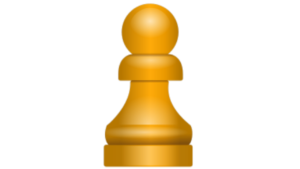
Info to learn: Worth 1 point, they only move forward, they do not move backwards. On their first move (only) pawns can go up 2 places in one go. Subsequently they can only move forward one. They capture a piece diagonally forward one square on both sides. If a Pawn makes it all the way to the end of the board you can promote it to a Rook, Queen, Bishop or Knight.
From my reading pawns were originally the foot soldier, symbolizing infantry and the most numerous piece (each player gets 8).
Looking at the piece itself and starting to put something together in a mnemonic my brain makes up this story:
Start by looking at the shape. I see that the Pawn has the least descriptive shape to it, it looks like infantry, every one needs to be the same/dressed the same/work as one – not unique or jumping out – which matches the shape. Likewise, it can generally only move forward one move. My brain matches this as well to infantry, limited movement on foot. I explain to myself that when they were first trained as infantry that their superiors may have given them a bit of leeway to stuff up. Hence the two moves forward if they want, but only for their first move. Once the game has started they are not able to leave the war, so they cannot retreat (ie they can’t move backwards).
To remember they are one point I think of the same reasoning, they are the lowest piece in the wargame with the highest supply, so it makes sense that they are only worth one. I actually also use my number system but it is not really needed here given there are not many pieces to learn.
For the information that they capture diagonally I just see an infantry soldier stepping out with one foot on an forward diagonal to aim and shoot.
For promotion I remember that if an infantry soldier makes it to the end of war without capture, they may well be promoted.
Knight
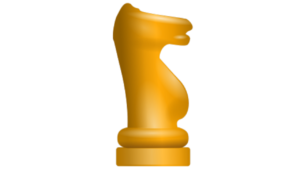
Info to learn: It is worth 3 points, it moves in small L shapes (such as up one and over two or over two and up one), it is the only piece that can jump other pieces. They can also go backwards.
This one I can easily get the mnemonic just looking at the piece, it looks like a horse so this easily translates to knight for me.
Likewise, the way it moves makes sense. Horses can jump, so its logical it is the only piece that can jump.
Same with the way it moves in L shapes, this is very agile and not just always in one direction. I spend a moment visualising a knight jumping over two hurdles and then turning and stepping forward one step to make the L shape lodge in my memory.
For backwards, I explain this again with the agility of a horse. Not that it physically jumps backwards but on a course could quickly turn and go in the other direction.
To remember that it is worth 3 points, I used my number system – one version of my numbers 3 is an apple. Horses eat apples, I see one munching happily on one after the game.
Don’t let this confuse you if you are new to mnemonics, numbers are just an image code you learn.
But if I did not have this system I would probably just think ok, what does a 3 look like? First thought, a bum. Yes, we often see the horses bum when it rides, so this makes sense. Seems silly but you will be amazed how the number will come back to you when you are thinking “What is the Knight worth?”.
Bishop
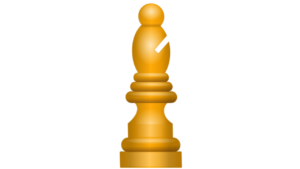
Info to learn: Like a Knight worth 3 points. They can go forwards and backwards diagonally on their own colour as many free squares as it wants in a move.
Historically this piece was an elephant, later in Europe rebranded to represent the religious authority. I can make a story from this to help me remember the details.
The slit or “Mitre” on the Bishop piece is to represent the hat worn by a bishop. I also can kind of see it as a tusk. And it is on an angle.
Elephants can wander far…and this matches how this piece can move as far as it wants (diagonally) on their own colour. How do I remember diagonally? Here I had to stop and think for a second. I found two hints – the slit is on an angle, and also an elephant’s tusks are often angled outwards, (when I googled the image they often point out on a diagonal). Together these hints helps me remember how this piece moves.
Again 3 points. Here I can use the same points as for the knight – the elephant is another animal, so seeing the Bum for the shape of a 3 still works. Likewise for my own number system I see an elephant eating an apple (apparently elephants love apples!)
Rook
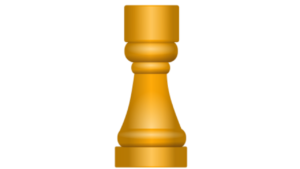
Info to learn: Worth 5 points, can go vertically up and down, and horizontally left right, as many free squares as they like in a move.
Historically a chariot, an armed war vehicle, then later in Europe it evolved into a Castle or Tower. It looks like a castle turret to me, but the right word these days is Rook. If I put these bits of information together, I am looking for an image to remind me of the name Rook. The first think that reminds me of is the word chook – the Aussie slang for a chicken. I see a castle turret with chooks wandering around inside it to help me remember it is not a castle but a rook.
For the direction, a few things spring to mind but the one I settle on is that as I am looking down on the chooks I see that they only peck along in a plus symbol shape +, I wonder if their feed has been put down in that shape.
For the 5 points I use my existing number system, but without this I would likely do something like imagine that outside the castle gate is a knight with two pawns (which I see as a horse and two infantry waiting at the gate worth 3 plus 2).
Queen
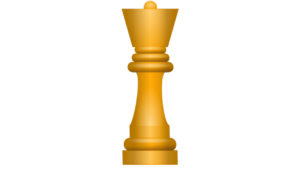
Info to learn: Worth 9 points as the most powerful piece. Can go in any direction as far as they like. In this they are a like a Rook and a Bishop combined.
I am likely to remember how they move given I have learned the other pieces and understand a queen is the most powerful moving piece. It also makes sense. In history a queen has great power, often the most influence and can move fluidly and in many directions through society to advise the king. And we will see shortly that the king is all powerful within a limited range.
9 points, this piece is worth almost two Rooks. If the other information is solid, that will likely be enough to recall the points score without a more specific memory image.
The point system generally makes sense when thinking in historical terms about war – Infantry at the bottom, then a knight with their horse, an elephant / bishop worth about the same, then a castle is the higher on the scale followed by the queen and finally the king.
King – worth the game
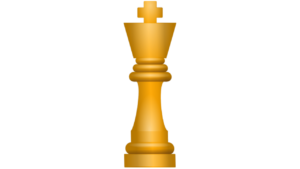
Info to learn: Capture loses the whole game, a King can go in any direction they like (like the queen) but is limited to move only one square. Protect at all costs.
This also just makes logical sense, and with the other pieces remembered and after thinking about the pieces historically it is easy to remember that while the King is all powerful and can move in as many ways as the Queen, like in many true historical settings the king is trapped in a ‘royal prison’.
Special moves
There are some other special other moves including “castling” with a King and Rook moving at the same time and a Pawn special move called “en passant” . I memorized these while looking at a moving board example rather than with the above techniques, because they are multi move and slightly more complex. Once you understand the pieces base characteristics this visualization is an easier way to memorize these moves.
5. Spaced repetition
This is the last step to solidify your newly memorized information.
In the case of chess this simply means get on and get playing, and when you need to pause and try to remember how the piece can move, try to lean on your stories you made, linking to how the piece looked.
Apart from Chess, other learning without such a natural revision as playing the game, spaced repetition needs something else.
Many times, this is planned revision. For this, I use flashcard software such as Anki as these are ideal tools for this sort of learning. You can watch this video and read this blog if this suits your learning task.
6. Repeat with the next information you need to memorize
Take your time with deep learning projects like chess, try to really understand the newly memorized material before jumping ahead to the next task.
Move on to the next information task you have identified. Repeat step 1 to 5.
Even if it is for the same overall learning goal “ie learn chess”, the next task may need to use different underlying memory techniques.
For some memorizing this last step may even involve going back into a memory palace where you have stored information and layering the next deeper levels of information into that old palace. I am planning on writing a detailed blog and video on this soon.
Hopefully following the overarching strategy helps you get you started on your next big learning project. While chess may not be on your journey, we all can use a little help along the way : ) For more, watch also my large learning projects video
As always if you’d like assistance, reach out via email or book in for a 1-on-1 memory coaching session together.